POV
CAMERA IS THE TRAVELEREmpty road. The car is not a persistent foreground. Path-relative forward travel through the canyon.
A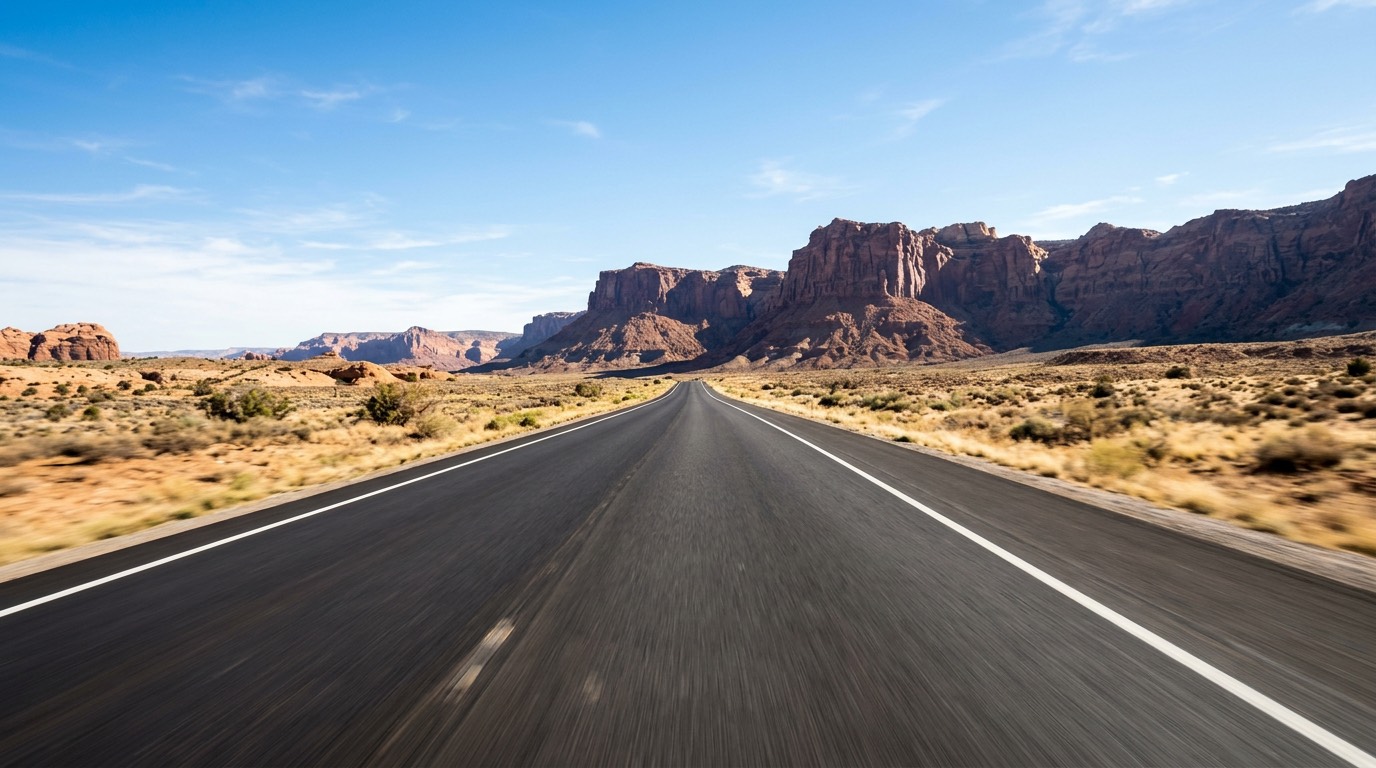
B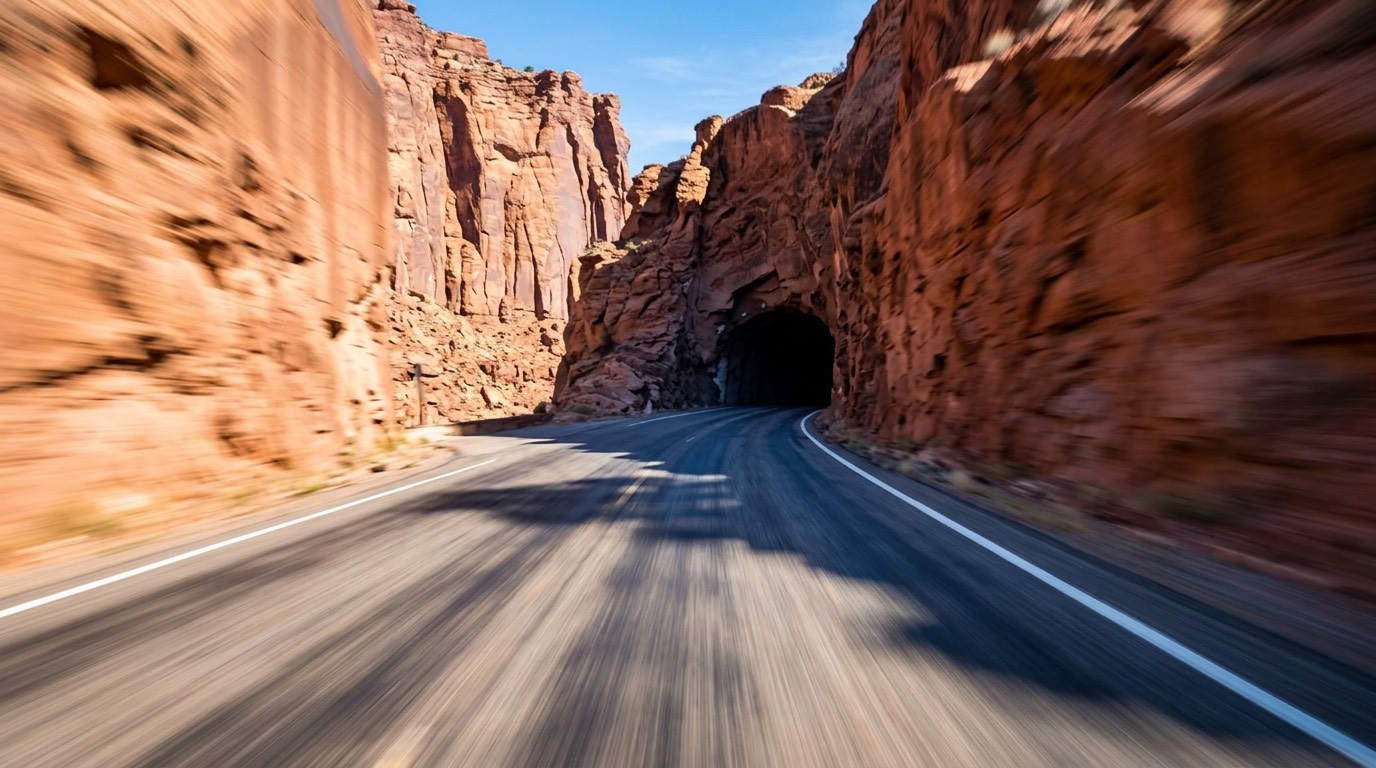
C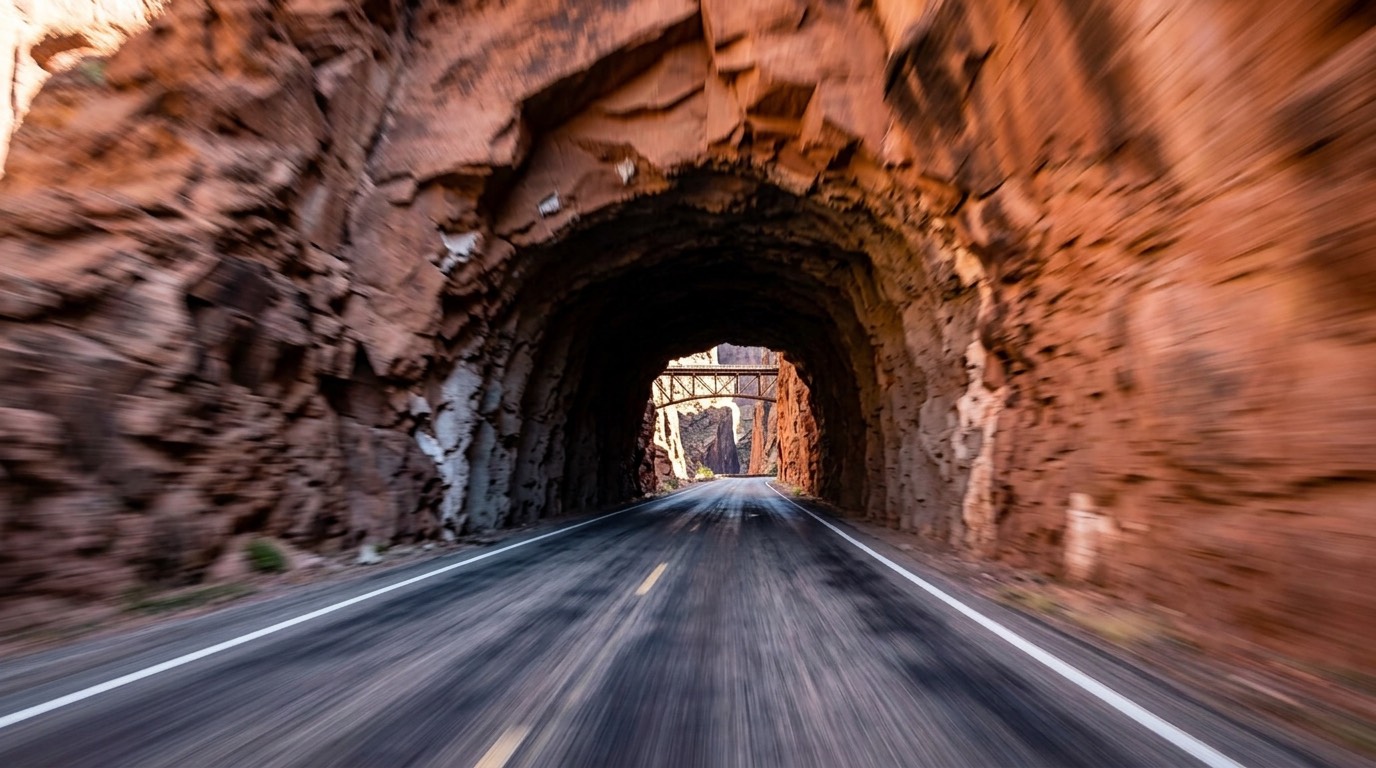
D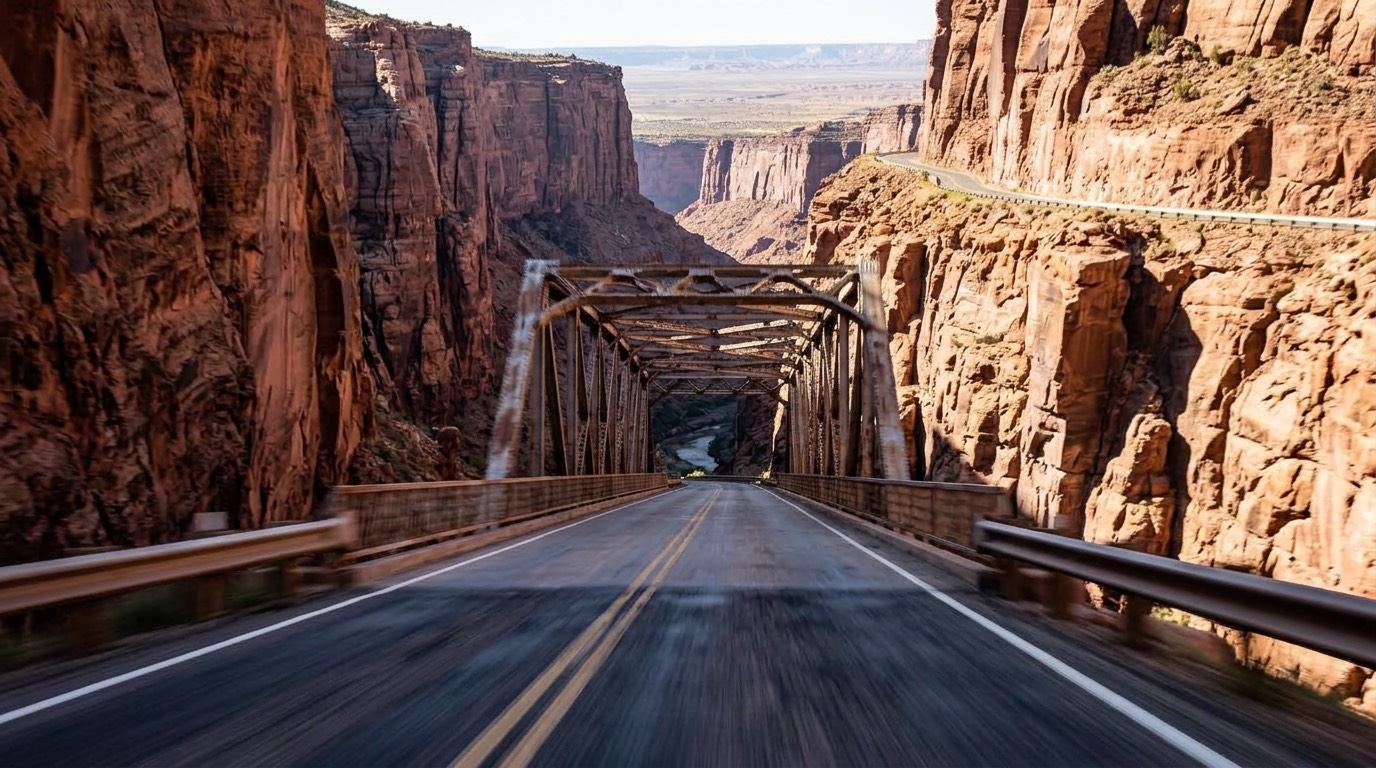
E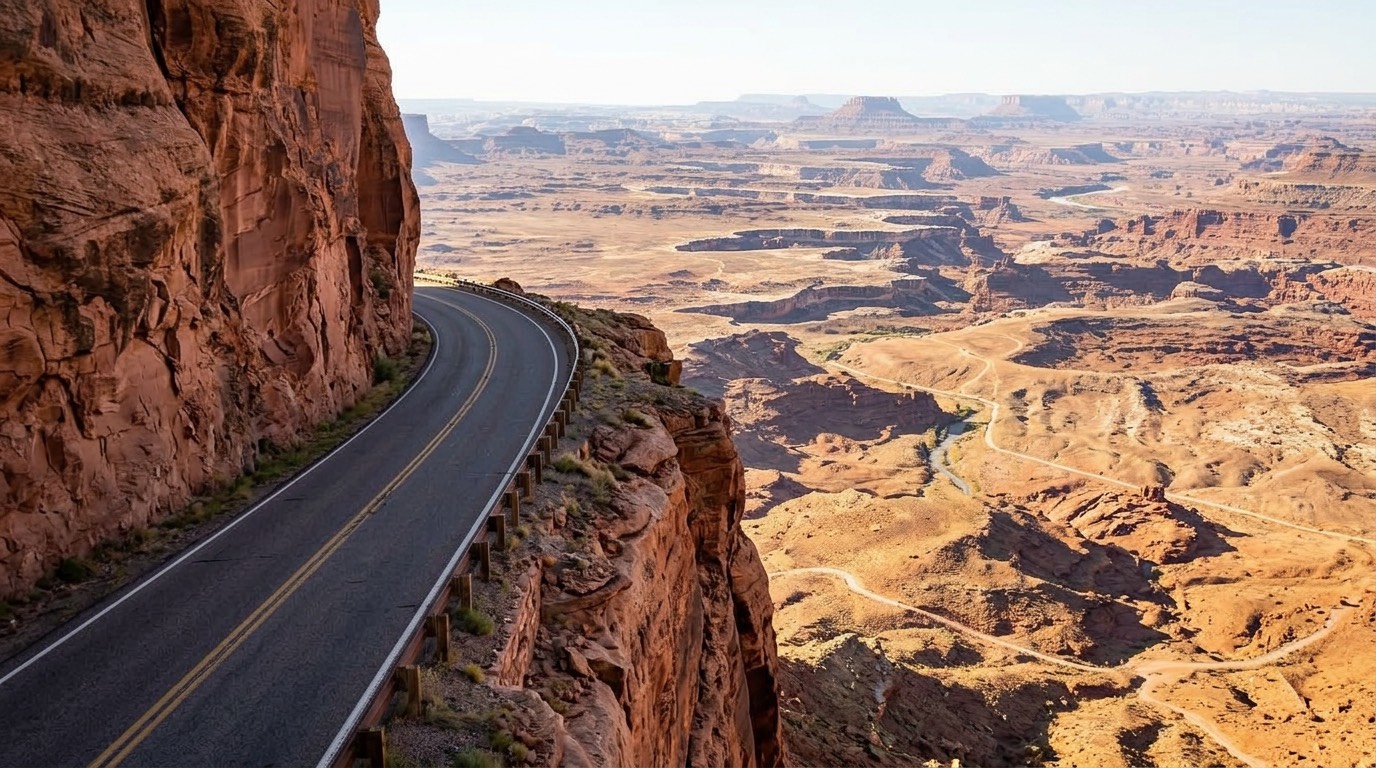
Until now every TunnelVision journey was first-person: the camera was the traveler. That is still one grammar. It is no longer the only one. A Project now picks a whole-journey camera relationship — POV, FOLLOW, LEAD, or MOUNTED — and Director, stills, Cinematographer, and the locomotion baseline all stay on that choice. The filmmaker describes the movie. TunnelVision figures out how to shoot the journey.
The camera is the traveler. Unembodied. It moves through the world along the physical route, turning and banking with the road. No cockpit, hood, hands, or persistent rig.
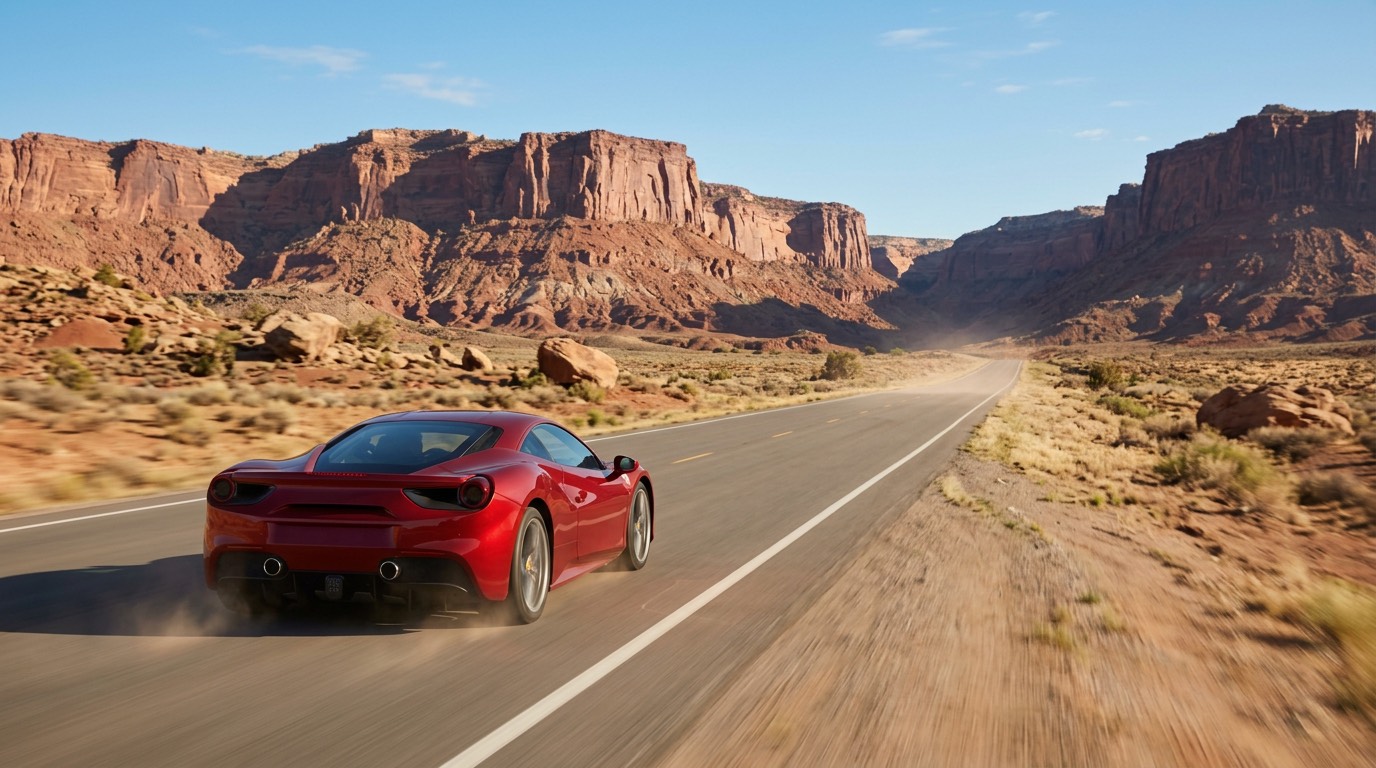
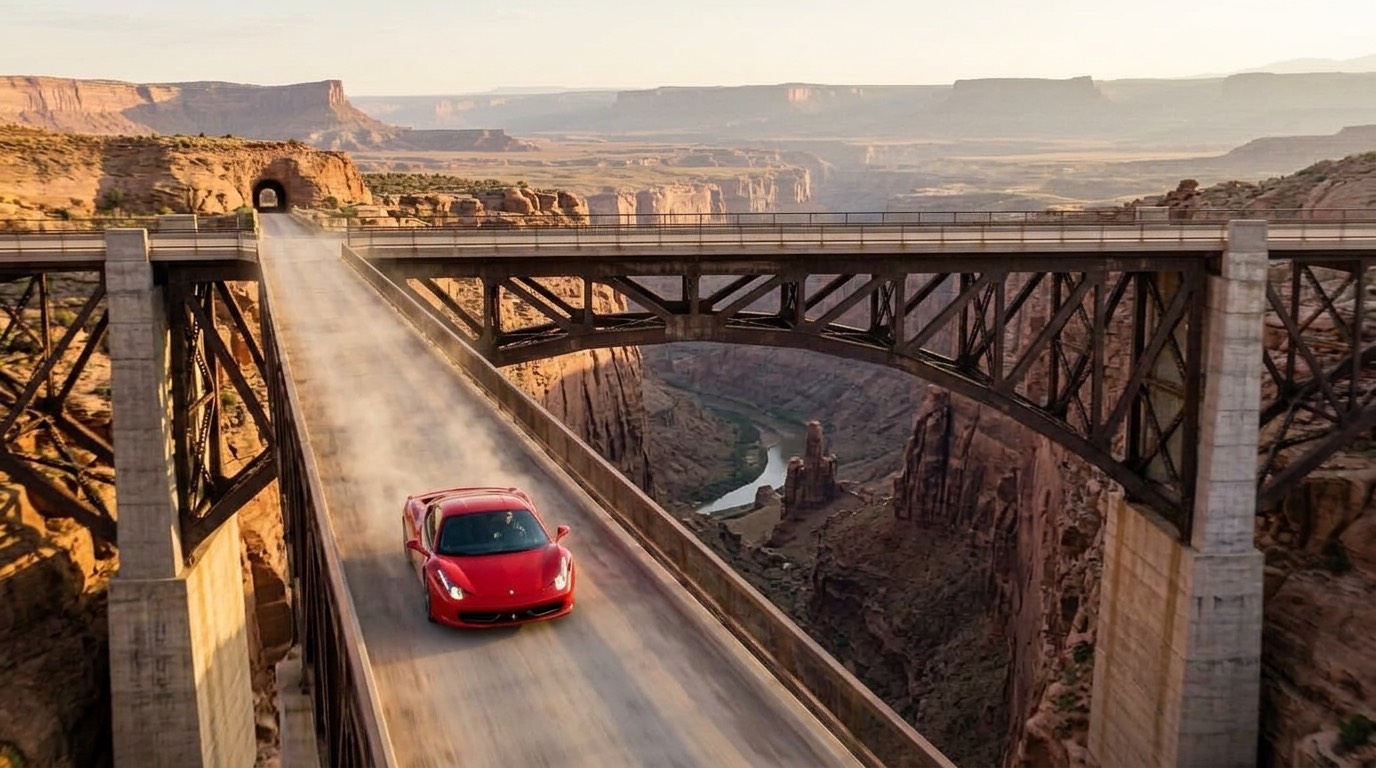
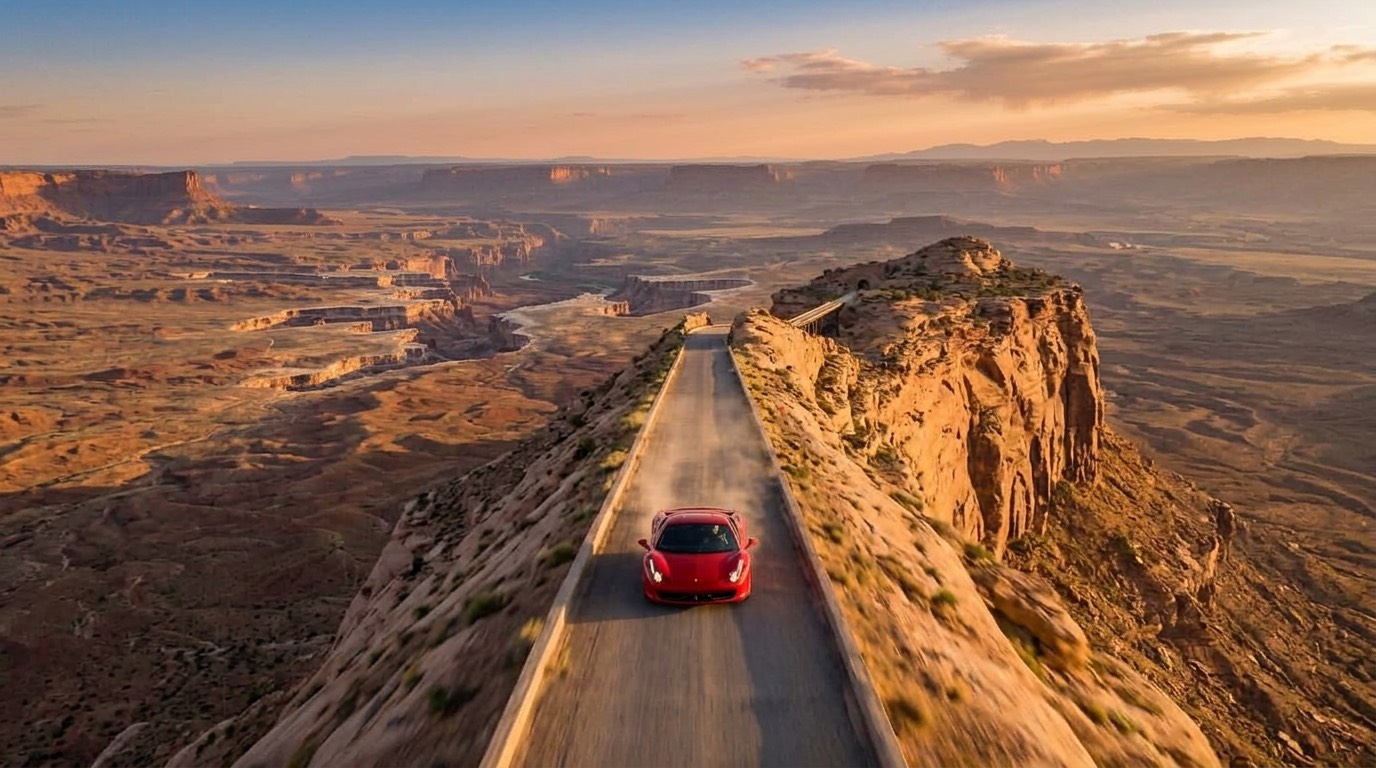
An invisible objective camera pursues a persistent subject. The relationship holds; the distance does not have to. The subject may pull ahead. The camera may lag, catch up, or bank. It does not overtake, and it is not a second traveler.
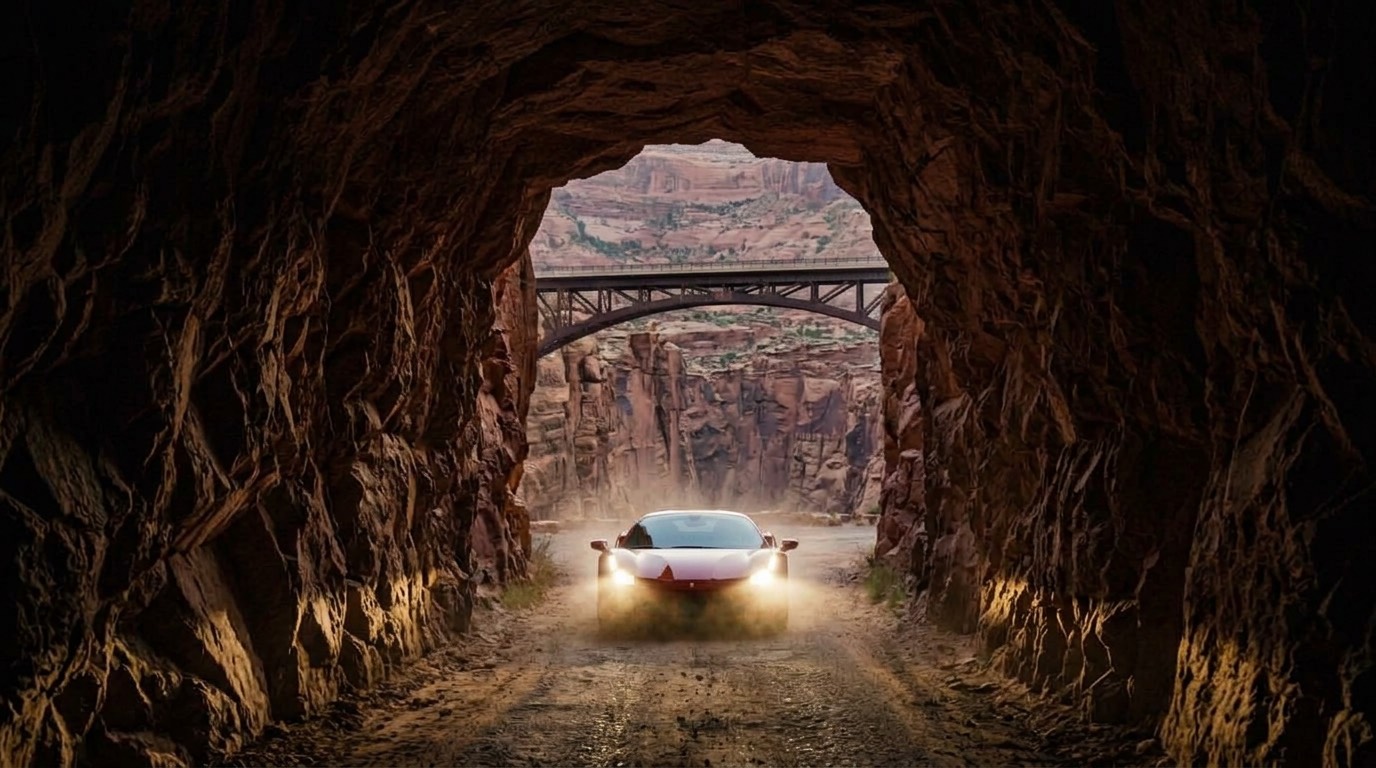
An invisible objective camera stays ahead of the subject and faces them, usually retreating as they advance. Forward-only POV travel is not this grammar.
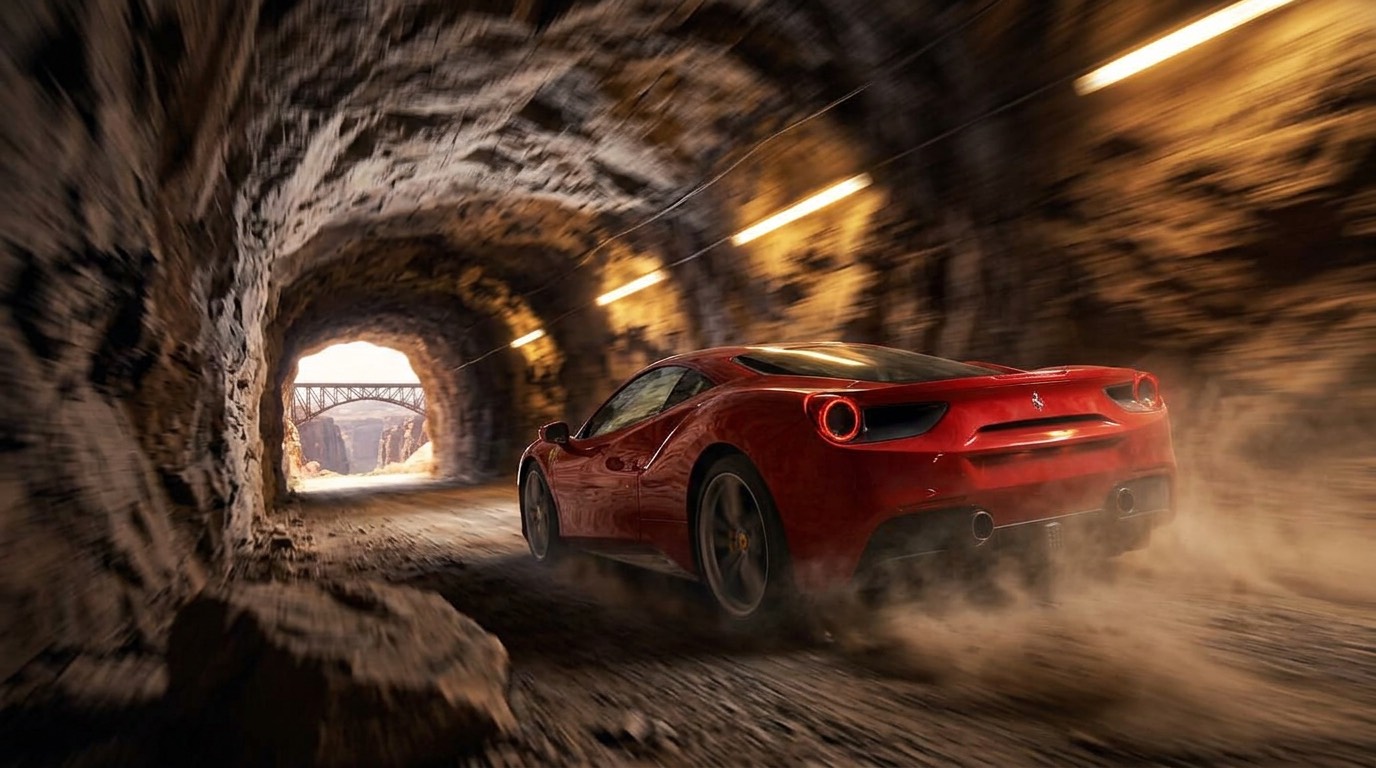
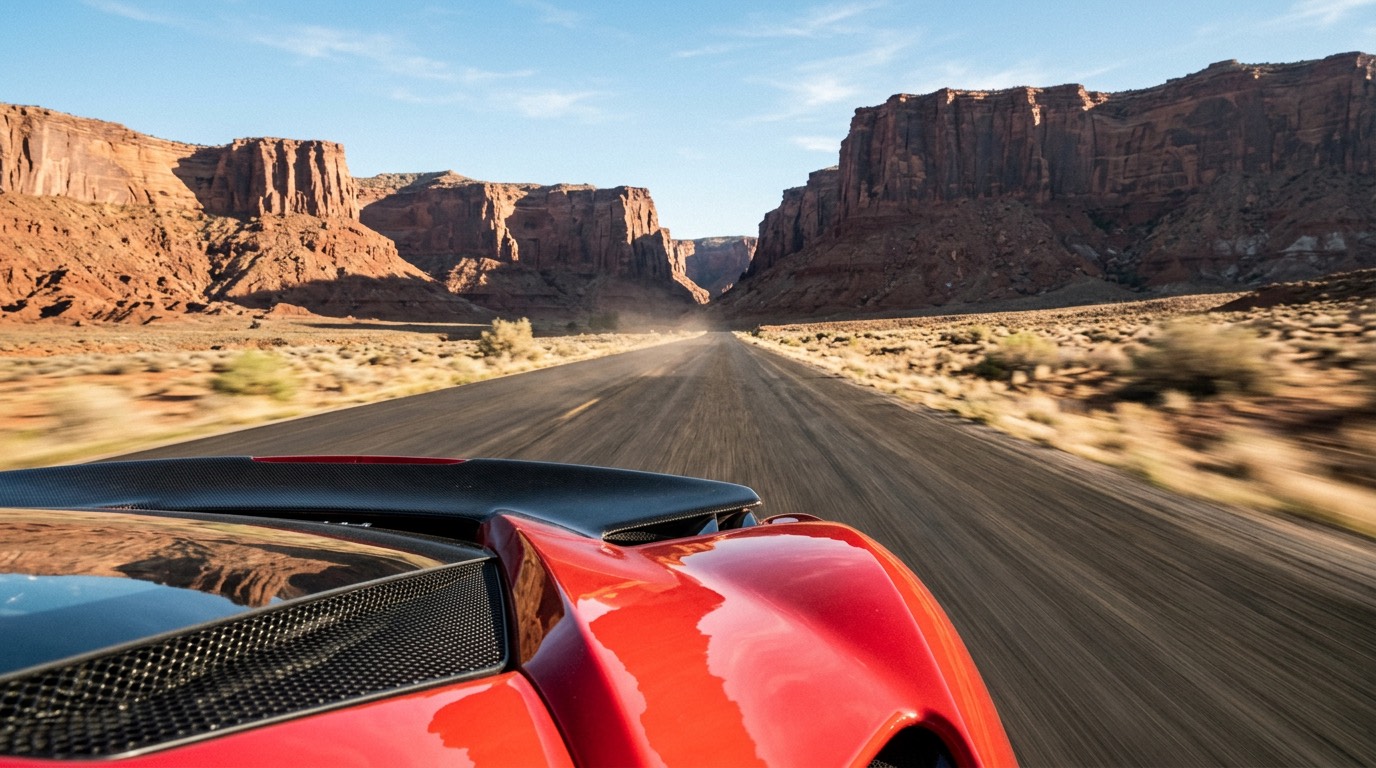
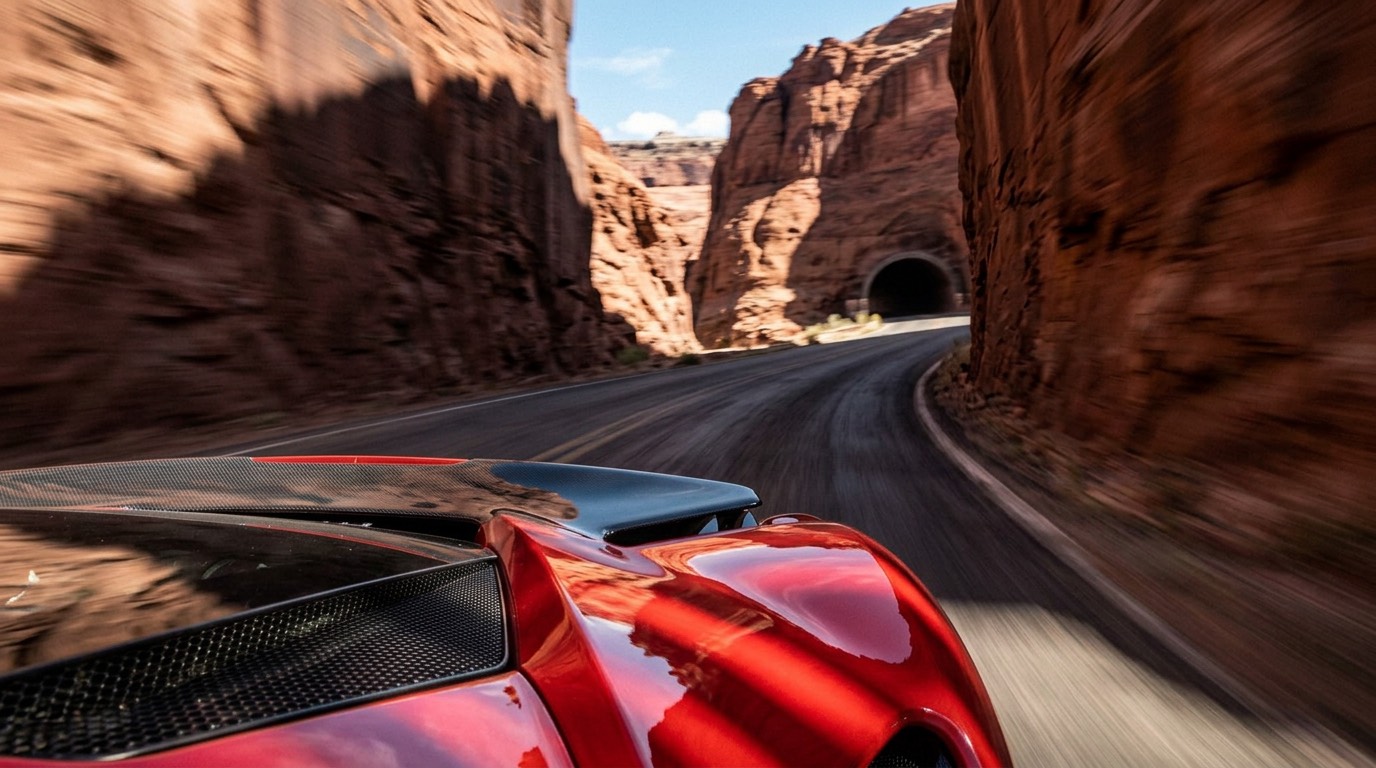
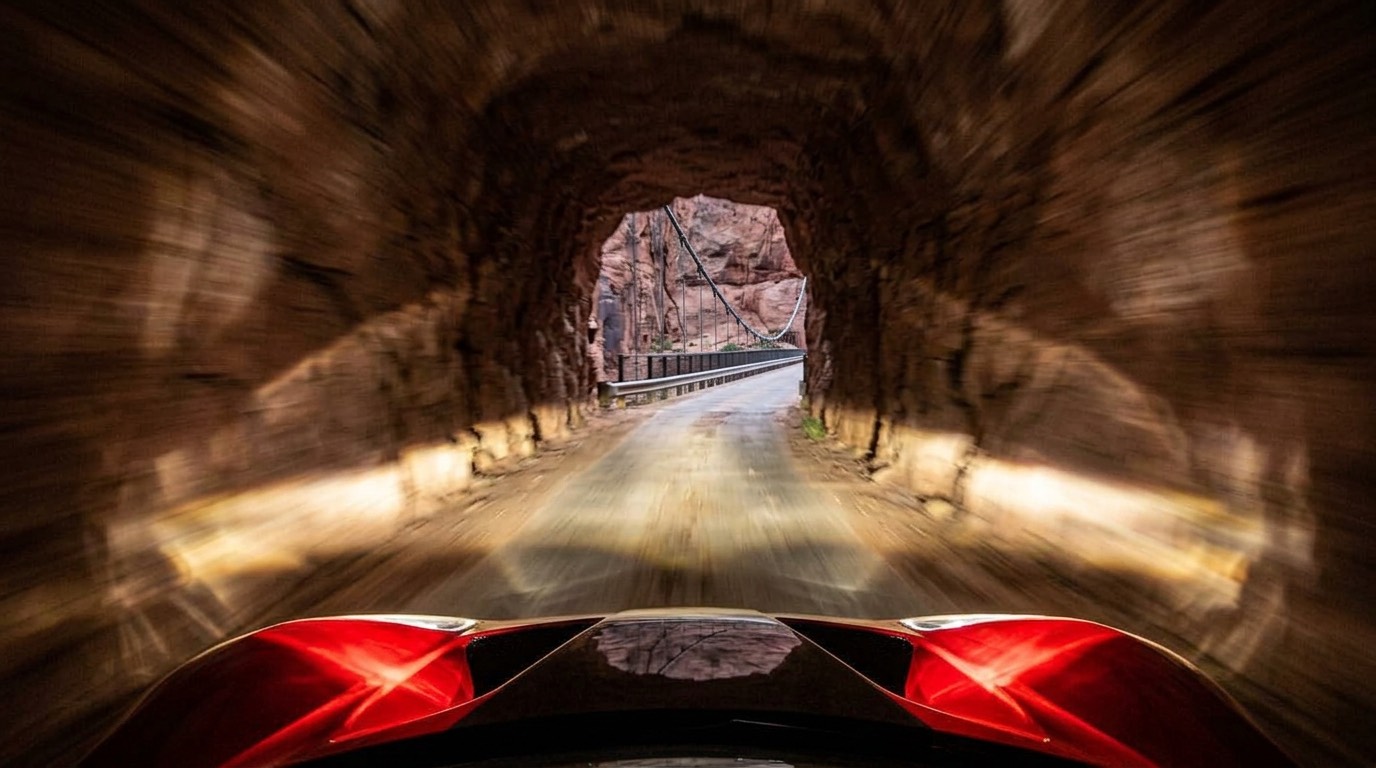
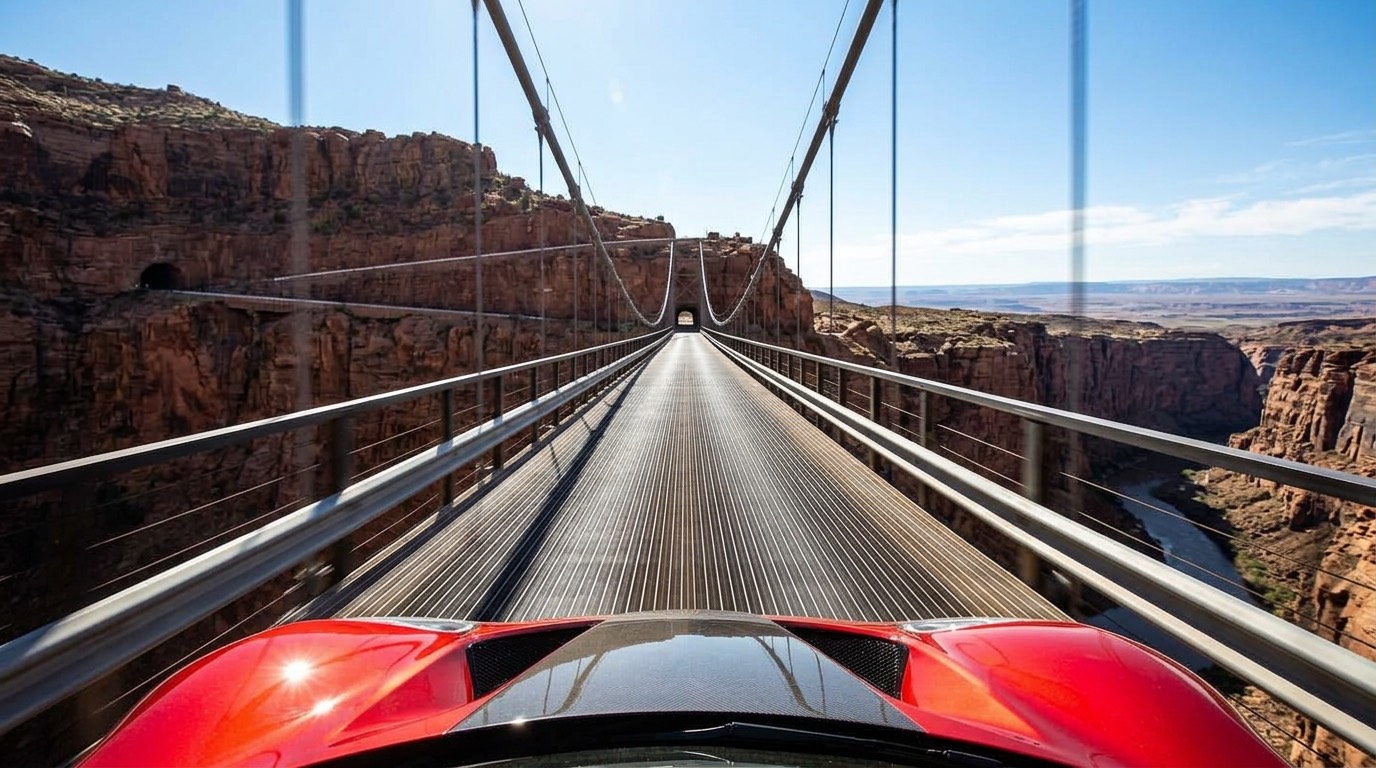
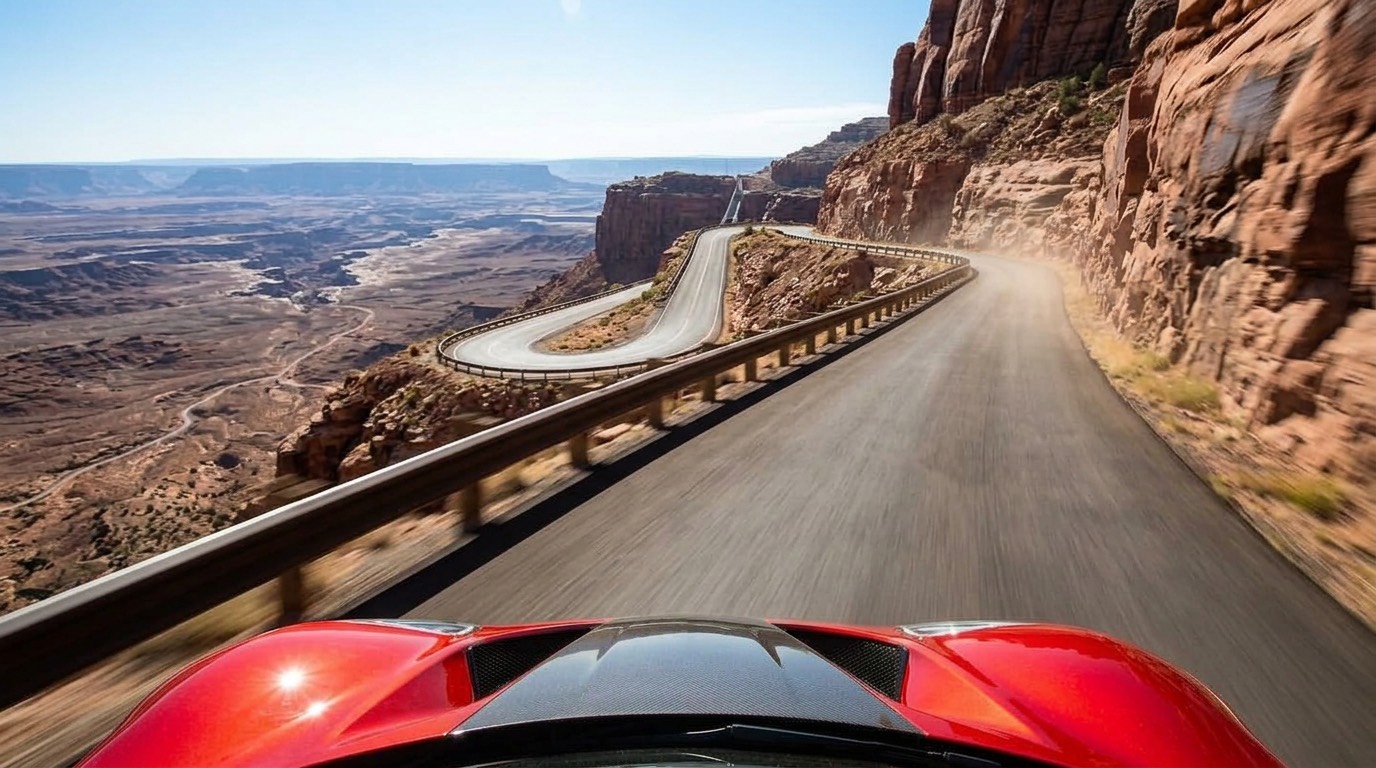
The camera is attached to the moving subject. Motion inherits the vehicle. Hood, frame, or similar geometry may stay in the shot — that is the point, not a mistake.
Grammar is a Project setting, not a per-shot switch. Mixed POV then FOLLOW then LEAD in a single journey is out of scope. Prompt Coach, Director, and CM share the same setting so the human prompt does not have to restate low-level camera law on every beat. The old locomotion baseline assumed first-person forward travel; that would rewrite LEAD into a fly-past. Each grammar now has its own baseline. Segment Motion Plan still describes this pair first; the grammar baseline comes after.
The four tests below are the same story: a red sports car, a desert highway, a canyon road, a rock tunnel, a high bridge, an overlook. The variable is camera relationship. Canonicals show how each grammar sees the route. The movies show how it moves. Watch those.
Empty road. The car is not a persistent foreground. Path-relative forward travel through the canyon.
The red car is the continuity anchor. Distance may open on the cliff road. That is FOLLOW, not a bolted-behind mount.
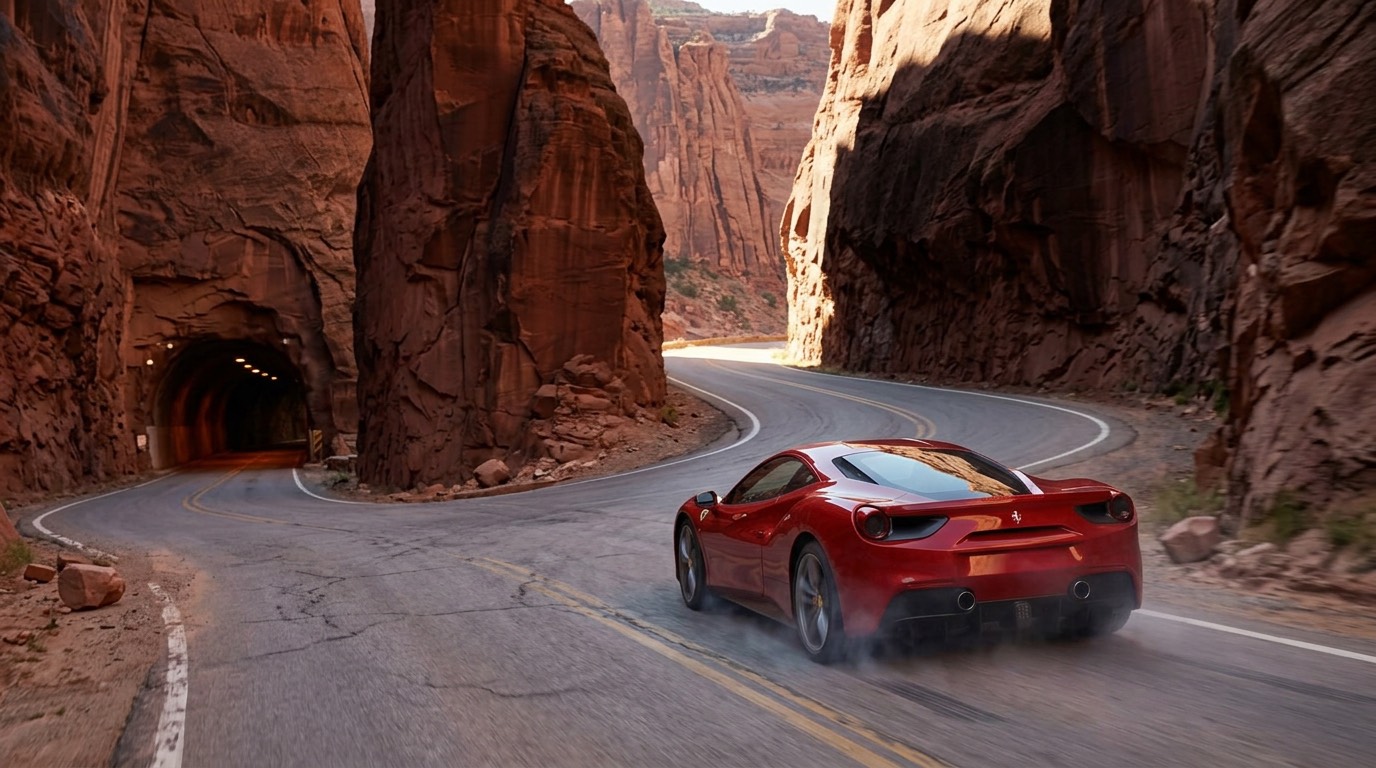
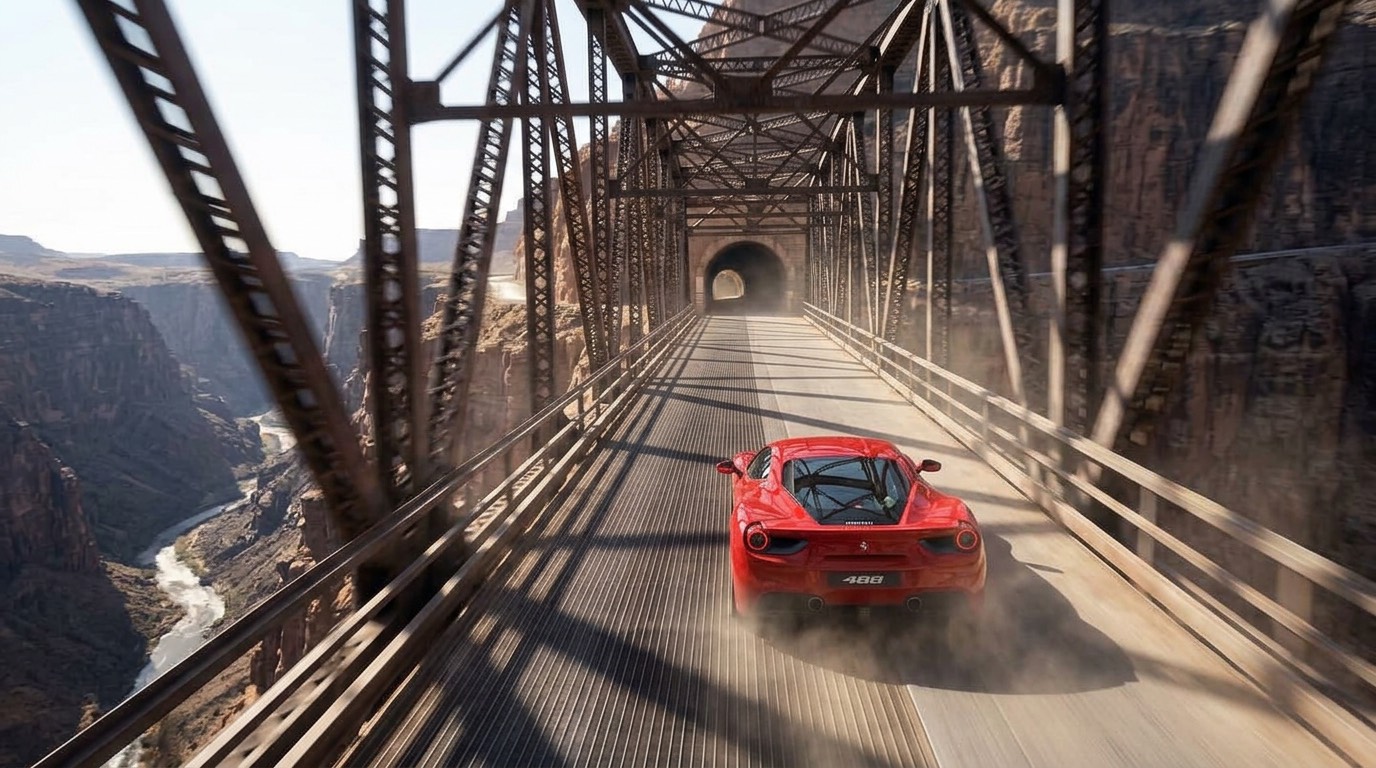
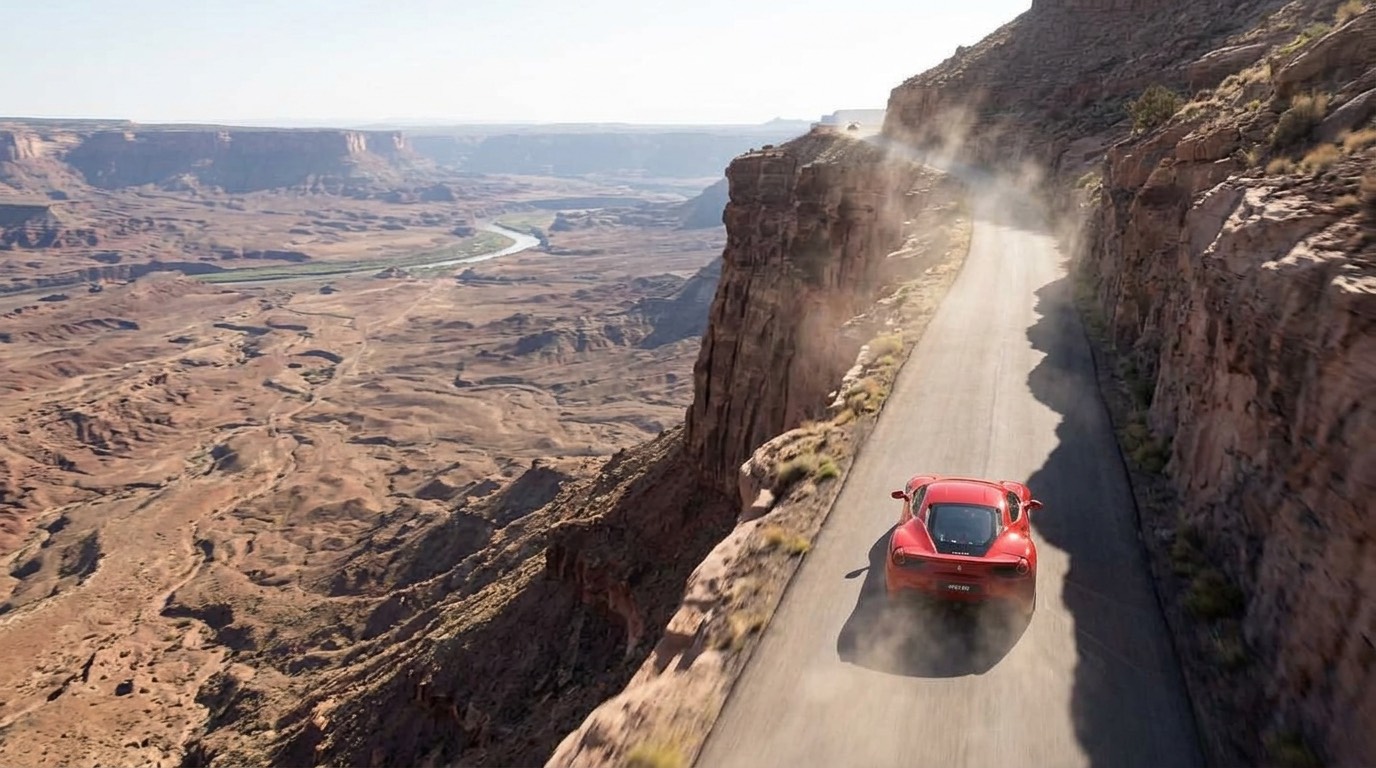
The camera retreats. The car comes toward it. Do not read this as a reverse-angle error or a forward fly-past.
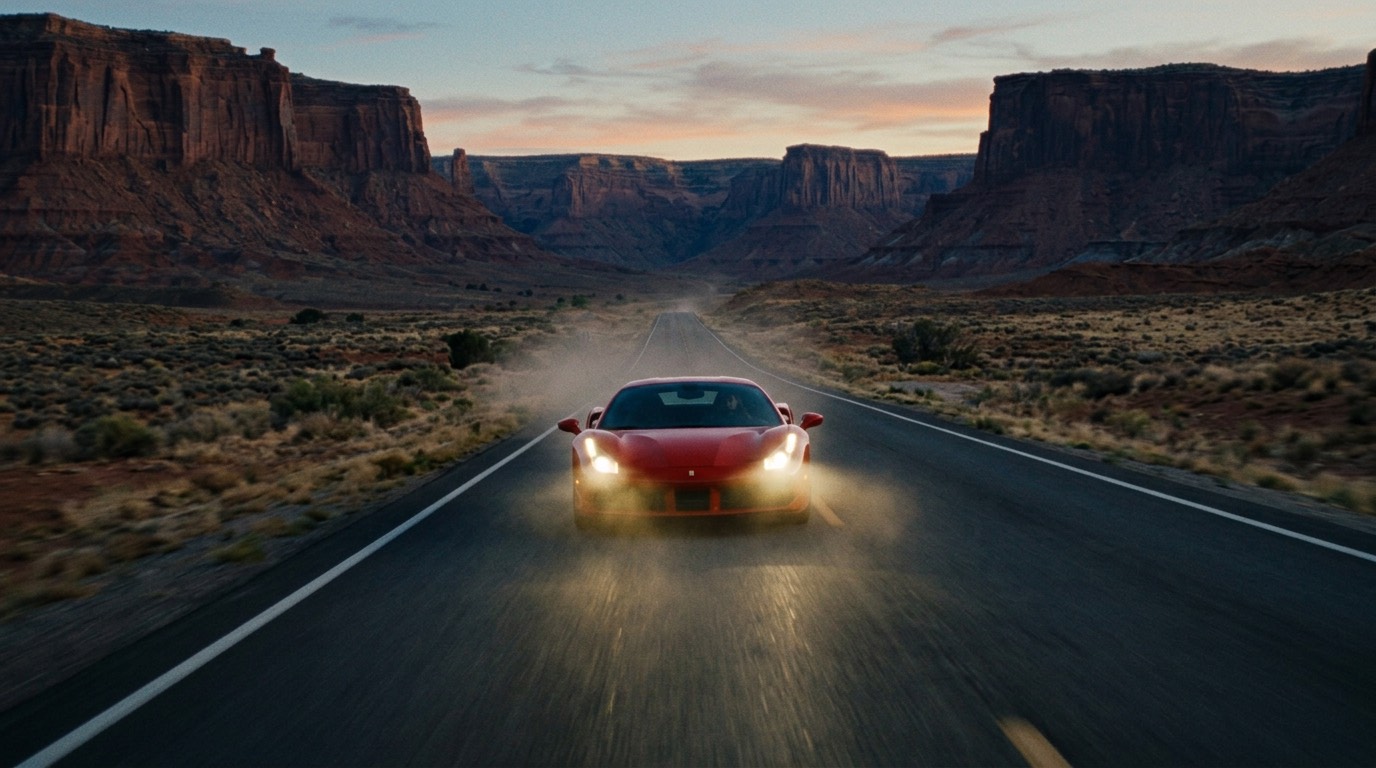
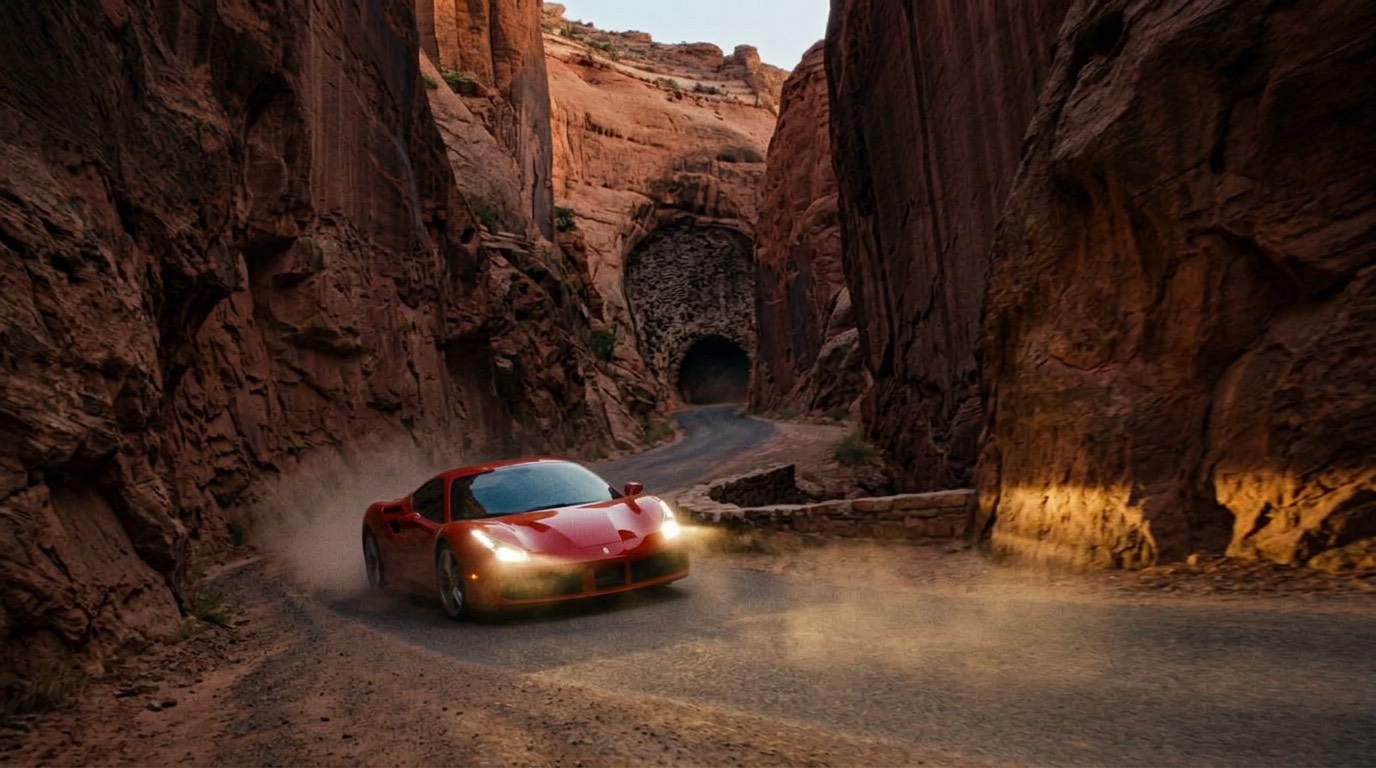
Hood and body stay in frame. The camera inherits acceleration, banking, and vibration.
Same route. Four relationships. Slice 8 remains the product overview. Slice 12 remains Agent CREATE JOURNEY. This chapter is the camera-grammar control: a Project setting, four dedicated baselines, and four watchable cuts of the same canyon. Mixed-grammar journeys stay post-hackathon.